Photo Source: Rev. Jim Burklo
NOTE: To better experience this story, use Snapchat to unlock augmented reality experiences with scanned 3D models of migrant artifacts found along the Arizona-Mexico border. This post will walk you through how to use these Snapchat codes.
When border-crossing migrants get exhausted under the Arizona sun, they often drop their valuables in the desert. These items include personal letters, photos of loved ones, covered water jugs and "sneaky feet."
Whether they are from adults or children, these artifacts offer a small glimpse into those crossing — hoping not to be caught — as they chase a piece of their American Dream.
Reverend Jim Burklo, senior associate dean of Religious Life at the University of Southern California, has become the keeper of many artifacts. For about ten years, he has taken students to the Arizona desert during spring break for CONOCIMIENTO, an interfaith service-learning experience to learn about border conditions and humanitarian issues.

One of the items he guards is a lonely cowboy boot — about the size of a coffee cup — that was found on a desert trail around seven years ago. He doesn't know the story, but it likely had belonged to a small child who, possibly, may have lost it while running away from Border Patrol agents with his or her family, Burklo said.
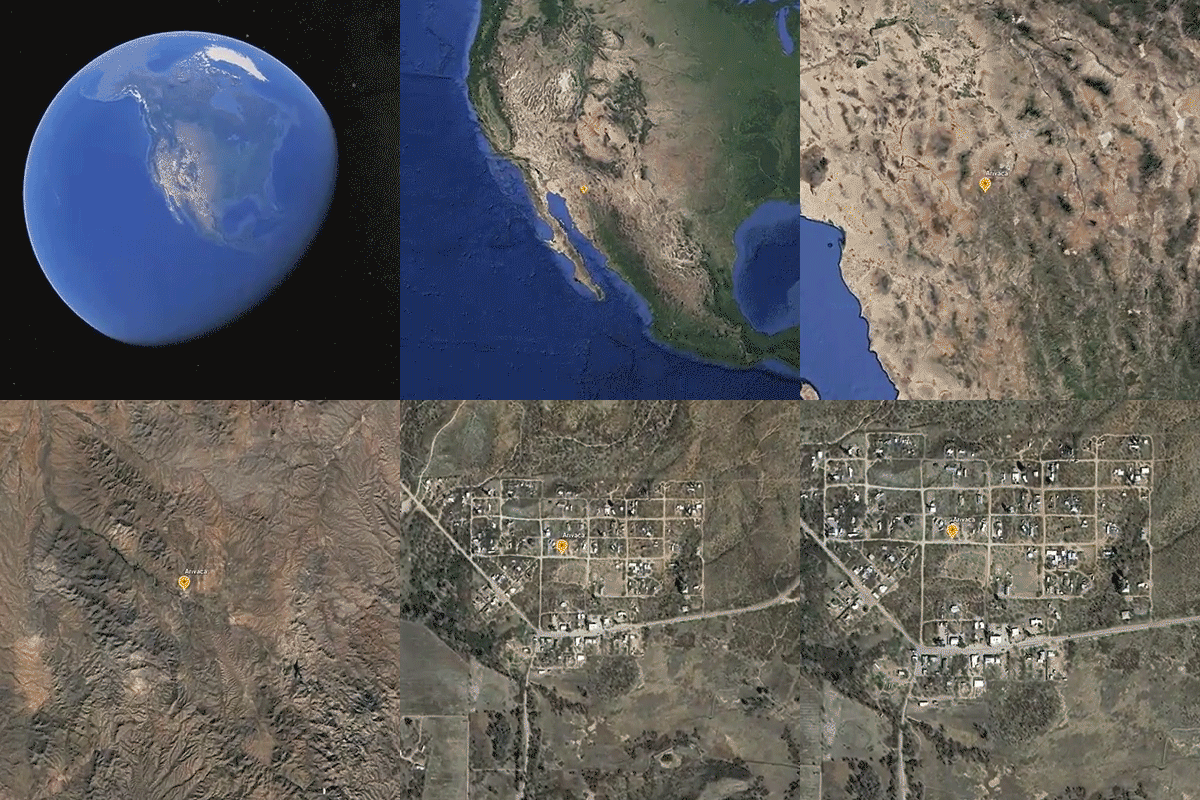
It was found about 10 miles north of the Mexican border near Arivaca, Arizona. That's where migrants, doing the days-long walk to reach a safe end in the U.S., start getting so worn out that they can't carry their belongings anymore. To lighten their load, they shed whatever is not absolutely needed.
The Tucson sector of the Arizona desert, about fifty miles between Nogales and Sasabe, used to be one of the biggest crossing points in the country. Still, despite the dangers, hundreds of people cross that stretch on foot.

Every year, more than a hundred bodies are discovered on the trails, says Burklo.
"They are the ones who are found — the desert is such a harsh place that the bodies disappear," Burklo says.
He, and local Arizonans, have found countless artifacts from the area throughout the years: letters, photos, camouflage backpacks, high-protein food cans, electrolytes-heavy drinks and what he calls "sneaky feet" — carpet-based slippers made to evade footprints in the sand.
"They're not bringing anything that is not critical to their survival," Burklo says.
When "migra" chases the migrants, they drop everything to be able to run faster. "They're in trouble at that point," says Burklo. "They have no water, no food and no protection in the wilderness."

Water is dropped last.
Covered or painted black to hide the shimmer from the border drones, multiple bottles are needed to survive in the scorching conditions.
The few natural water points are known by the border agents. The water jugs left on trails are often sliced or kicked over, and Border Patrol agents have been caught on video doing so.
For Burklo, nothing is sadder than visiting the sites where migrants have died close to civilization. One man, for example, passed away a hundred yards from the highway.
"Probably he wasn't even aware that he was so close to help," Burklo says.

The number of people doing the journey in the desert has gone down, especially with children. Parents don't want to expose their kids to the ever more remote backcountry — due to vigil enforcement around towns or to the narco gangs running the human smuggling.
Burklo believes that migrants are given or sold "kits" to survive the deadly journey into the U.S. He notes that someone is manufacturing "sneaky feet," and it's likely the smugglers, "coyotes," or the narcos.
The most personal items, wrinkled and faded in the sun, are the photos and letters scattered in the wilds: pictures of weddings, birthdays and newly-born babies.
"You just feel the loss and separation, when you see these items on the trails," Burklo says and cites the notes:
"I miss you papi, buena suerte — good luck, I love you, I hope you come back."
Reverend Jim Burklo on photos found in the desert: